
🇺🇸 A Value Analysis of the S&P 500
This report analyses the valuations of the companies in the S&P 500 from multiple angles - and in particular - seeks to find the subset of companies that have seen their share price growth come from free cash flow growth and not valuation growth.
When a company's shares go up in value, many investors take the view that the company is now more expensive. And a company that has grown from $100 per share to $150 per share is indeed more expensive solely from a share price perspective.
However, it is possible for a company's share price to go up and its valuation to remain the same, or even come down.
Let me explain. If a company grows its free cash flow per share (FCFps) by 10% and its share price goes up 10%, then the company's FCF yield has remained the same. The share price growth has therefore been driven by the company growing and not the shares becoming more expensive.

And if FCFps grows by 10% and the share price only goes up by 5%, then not only has the share price gone up, but the FCF yield has also gone up.

Let's take a look at the constituents of the S&P 500 to work out whether their growth has been driven by FCF going up or the FCF yield going up/
Highest FCF yield stocks
- We will start with something simple. The below is a list of the companies in the S&P 500 with the highest FCF yield.
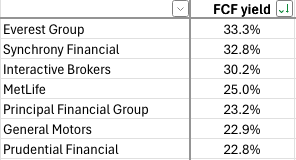
- So are these the cheapest companies in the S&P 500? Not exactly.